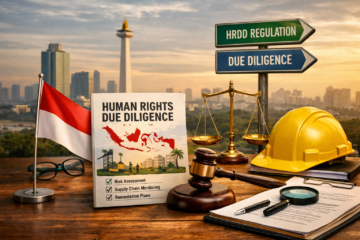
The short answer is no. The EU’s Omnibus package changes timelines and narrows parts of the burden, but it does not remove the direction of travel. If you supply EU customers, raise capital with EU-linked investors, or compete with peers that sell into Europe, you still need a credible plan.
What has changed is how you sequence the work, what evidence you collect first, and how you engage customers on expectations.
What the EU Omnibus is trying to do
The European Commission framed the sustainability Omnibus as a simplification exercise, with amendments touching the Corporate Sustainability Reporting Directive (CSRD) and the Corporate Sustainability Due Diligence Directive (CSDDD), plus related elements such as Taxonomy adjustments.
By late 2025, reporting and media coverage described the package as reducing burden and, in some areas, narrowing the population in scope and pushing out deadlines, with political pressure coming from competitiveness concerns.
What this likely means in practice for Asian suppliers and exporters
Several summaries of the Omnibus agreement point to three practical effects that matter for Asia-facing supply chains.
First, some parts of CSRD scope and timing have been softened or delayed for certain groups, which reduces the immediate volume of customer questionnaires and “data calls” for some suppliers. The Commission has also signalled a desire to make reporting “less burdensome”.
Second, CSDDD remains in force, but discussions around Omnibus changes have included shifting emphasis towards direct business partners unless there is credible information pointing to deeper-tier risks. That can reduce blanket tier-N mapping demands, but it raises the bar on “what did you know and when did you know it” if credible risk signals exist.
Third, even when the EU slows the formal timetable, many buyers will keep moving. They do this because reputational risk, litigation risk, investor scrutiny, and product-specific rules do not wait for a neat schedule.
Why “waiting it out” is a risky bet
Many Asian firms treat the Omnibus news as a signal that the whole agenda is fading. That is a misread for four reasons.
Customer requirements will not pause in sync with Brussels. Large EU buyers still face CSDDD obligations (Directive 2024/1760 entered into force in July 2024), and they will keep tightening supplier expectations, particularly in higher-risk categories.
CSRD is already live for the first wave. The Commission notes that the first companies have to apply CSRD for the 2024 financial year, with reports published in 2025. That means your customers are already building reporting processes and will keep asking suppliers for inputs, even if the next waves shift.
The EU is not the only driver. Product and trade-related measures (for example, deforestation, forced labour, chemicals, product safety, and customs enforcement) keep pushing “proof of practice” expectations, even when corporate reporting rules get tweaked.
A pause now tends to create a cost spike later. When buyers tighten again, late movers pay more for rushed remediation, emergency data clean-up, and repeated audits.
What Asian businesses should do instead
The best response is not “do everything” or “do nothing”. It is to focus on actions that stay useful across any regulatory scenario.
Build a minimum evidence pack that answers the questions buyers always ask. This includes working hours and wage controls, recruitment fee and labour agent management, grievance channels, subcontracting controls, and incident response. These do not become obsolete if CSRD thresholds move.
Map your “risk hotspots” before you map your whole supply chain. Start with the highest-risk sites, processes, and labour pathways. If Omnibus pushes customers towards direct partners first, you want your direct-partner controls to be strong.
Treat data quality as a project, not an admin task. Buyers will keep comparing supplier answers across time. Inconsistent records trigger escalations.
Ask customers for alignment now. Many buyers will run parallel requests while they adjust to Omnibus changes. A short, clear note that asks for a single questionnaire set, a single evidence format, and a realistic timeline can reduce chaos.
A practical 60–90 day plan for a supplier or exporter
Week 1–2: You identify which EU customers are CSRD reporters now, and which are likely in the next wave, because their reporting cycles drive supplier data requests. The Commission’s own CSRD page is a useful reference point for the “first reporters” timeline.
Week 3–6: You fix the basics that buyers audit repeatedly, and you create standard files so you can respond once and reuse.
Week 7–12: You run a controlled internal check on one or two high-risk topics, such as recruitment fees or subcontracting, and you document corrective actions in a way a buyer can accept.
If you do only this, you are already in a stronger position than firms that wait for legal clarity.
What to watch next
You should watch for the EU’s formal adoption steps and any further “stop-the-clock” style implementation moves, because these change customer urgency, not customer direction. You should also watch how major buyers rewrite their supplier terms after the Omnibus, because that is what will land on Asian desks first.
Bottom line
The Omnibus is a recalibration, not a reversal. Asian businesses should not retreat. They should use the breathing room to build controls and evidence that hold up under any buyer request, any audit cycle, and any new rule that follows.
If you tell me which type of reader you want for this article (brand sourcing teams, manufacturers, or service providers), I can tailor the examples and the 90-day plan so it reads like it was written for them.