For over a decade, the conversation surrounding human rights in Japan’s supply chains has focused almost exclusively on the Technical Intern Training Program (TITP). Under the glare of the U.S. Department of State’s annual Trafficking in Persons Report, major corporations have scrambled to audit their factories to ensure interns aren’t being exploited.
But while compliance officers were looking left, a sophisticated new risk emerged on the right.
A quiet crisis is unfolding within the “Gijinkoku” visa category—a residence status intended for high-skilled professionals that is rapidly becoming a cover for unauthorized, debt-bonded manual labour. For global companies operating in Japan, this represents a dangerous blind spot in their human rights due diligence.
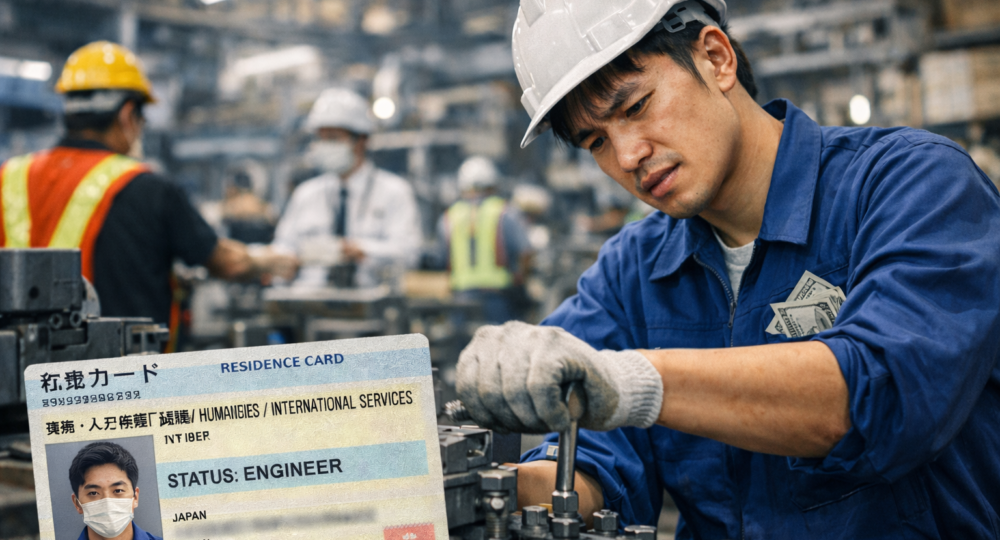
The “Engineer” on the Assembly Line
“Gijinkoku” is the industry shorthand for the “Engineer/Specialist in Humanities/International Services” visa. On paper, this is the gold standard for foreign employment. It is reserved for university graduates and experts hired for white-collar roles: IT engineers, translators, designers, and international sales managers.
Under Japanese immigration law, the distinction is clear: a holder of this visa cannot legally work on a production line, clean hotel rooms, or serve food in a restaurant. Those are “simple labour” tasks restricted to specific visas.
Yet, in practice, the lines are being blurred by a struggling labour market.
Of the 1.54 million dispatch (staffing agency) workers in Japan, roughly 399,000 are now foreign nationals. That is one in every four dispatch workers. As labour shortages bite, unscrupulous dispatch agencies have found a loophole. Because Immigration authorities tend to approve Gijinkoku applications for university graduates more easily than other visa types, agencies use these credentials to get workers into the country—only to place them in jobs that have nothing to do with their degrees.
The Million-Yen Bait-and-Switch
The mechanism of exploitation often begins thousands of miles away. Recruitment brokers in sending countries market these positions as prestigious engineering or office jobs in Japan. To secure these “premium” roles, candidates are charged exorbitant recruitment fees—reports suggest figures ranging from 1 million to 2 million JPY ($6,400 to $12,800 USD).
This fee creates an immediate state of debt bondage.
When the worker arrives in Japan and is told their “engineering” job is actually packing boxes in a logistics center or working a night shift on a food processing line, they are trapped. If they refuse, they cannot pay their debt. But the trap goes deeper than just money.
The Legal Catch-22
This specific form of exploitation is uniquely insidious because of the legal risk it places on the victim.
If a Technical Intern is abused, they are working within their visa scope and can, in theory, appeal to the Organization for Technical Intern Training (OTIT) for protection.
However, a Gijinkoku holder working on a factory line is technically committing a crime: “activity outside the scope of permitted status.” If they go to the police or the labour standards office to complain about their dispatch agency, they risk exposing their own illegal employment status, leading to arrest or deportation.
Exploitative brokers know this. They use the threat of deportation to silence workers who are often isolated, working in scattered locations without the support networks or mandatory legal training provided to technical interns. There is no supervisory body like OTIT looking out for them.
A Wake-Up Call for Corporate Audits
For companies, the implication is stark: a cursory check of a residence card is no longer sufficient defense against forced labour risks.
A dispatch worker may present a valid “Engineer” visa, but if they are tightening bolts on your assembly line, two violations are occurring simultaneously: immigration fraud and potential debt bondage.
As social audits evolve, they must expand beyond the traditional scope of Tier 1 suppliers and intern programs. The next frontier of due diligence lies in the warehouses, logistics fleets, and subcontracted service providers where these “hidden” workers are most likely to be found. The era of assuming white-collar visas equate to “safe” labour is over.