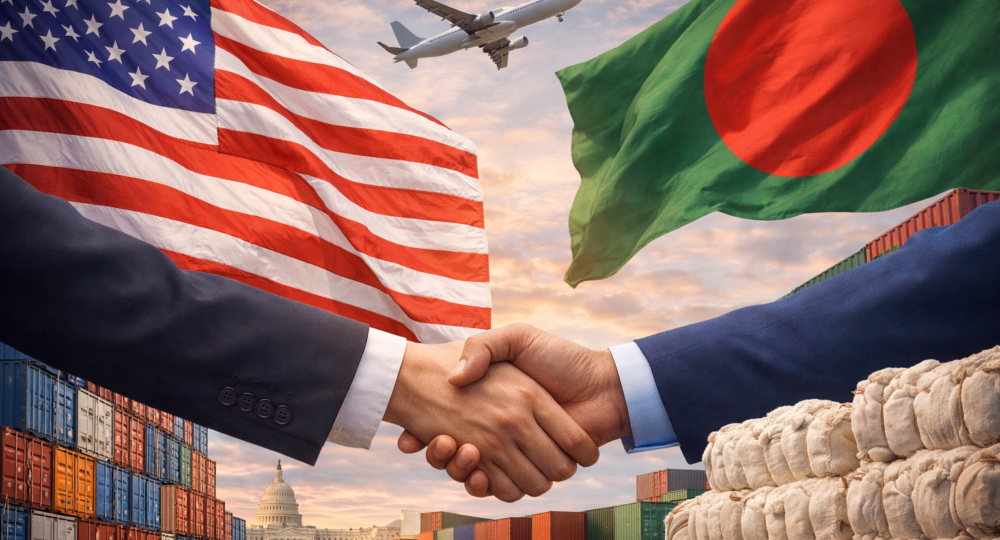
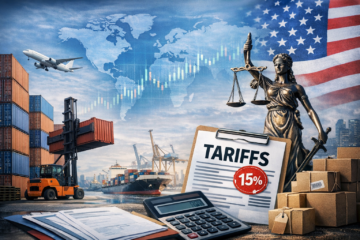
On 9 February 2026, Bangladesh and the United States announced a new Agreement on Reciprocal Trade that resets the baseline “reciprocal” tariff rate on Bangladeshi-origin goods to 19%.
For responsible supply chain audiences, the core story is not the one-point headline cut. It is the zero-tariff mechanism for specified textile and apparel flows, and the way that mechanism is tied to upstream fibre and textile inputs sourced from the US.
What changed for apparel market access
The agreement says the US will keep a 19% reciprocal tariff rate for imports from Bangladesh, with product-specific zero-tariff treatment for certain items.
It also commits the US to set up a mechanism so that a to-be-specified volume of textile and apparel goods from Bangladesh can enter at a zero reciprocal tariff rate, where that volume is linked to the quantity of US textile inputs exported to Bangladesh, with examples including US-produced cotton and man-made fibre textile inputs.
In plain terms, the deal creates an incentive for Bangladeshi producers (and their buyers) to route more sourcing towards US fibre and textile inputs, in return for a defined volume of duty-free access for eligible apparel exports into the US market.
Why this matters for supply chain decisions
Bangladesh is already a major US sourcing hub for readymade garments, and the new arrangement adds a “materials-linked” lane that can change costing and sourcing choices for some product groups.
The Financial Times reported that tariff-free access applies to certain garments made with US cotton and man-made fibres, alongside the 19% standard tariff for other goods.
If implemented with clear, workable rules, this can produce three near-term effects.
Buyers that sell large volumes into the US and source heavily from Bangladesh may test whether “US fibre + Bangladesh cut-and-make” produces a net saving versus the 19% baseline, once documentation and potential sourcing shifts are priced in.
Spinners, mills, and fabric traders may see new demand signals if the volume formula rewards higher US textile input exports into Bangladesh. That matters for lead times, financing needs, and the practical availability of compliant inputs at scale.
Competitiveness comparisons across South and Southeast Asia may sharpen, because the deal is explicitly designed to advantage specific sourcing configurations rather than grant blanket tariff relief.
The compliance hooks inside the agreement
The agreement is not framed as a labour chapter in the way some trade agreements are, but it does contain explicit commitments from Bangladesh that are relevant to responsible supply chain expectations.
It lists commitments to protect internationally recognised labour rights, including adopting and implementing a prohibition on the importation of goods produced by forced or compulsory labour, amending labour laws so that freedom of association and collective bargaining are fully protected, and strengthening labour law enforcement.
It also includes commitments to maintain high levels of environmental protection and enforce environmental laws.
For supply chain teams, these clauses are unlikely to change factory conditions overnight. They do, however, create a clearer line between trade preferences and domestic reforms, which can later show up in how governments and buyers talk about eligibility, monitoring, and reputational risk.
The “package deal” element
The announcement also points to wider commercial and policy elements that sit alongside the tariff arrangement.
The The White House statement notes “recent and forthcoming commercial deals” and lists aircraft procurement, around $3.5 billion of US agriculture purchases (including cotton), and energy purchases estimated at $15 billion over 15 years.
On aircraft, local reporting in Bangladesh says the government is moving towards purchasing aircraft from Boeing for Biman Bangladesh Airlines, framed as part of reducing the bilateral trade gap and supporting tariff outcomes.
What is still unclear
The biggest operational question is how the zero-tariff mechanism will work in practice.
The agreement text says the duty-free access will be volume-based and linked to US textile input exports, but it does not yet specify the eligible product list, the qualifying documentation, the precise volume formula, or how allocations will be administered.
Until those technicalities are published, many firms will treat this as a potentially material opportunity, but not something to bank into forward pricing for all programmes.
What supply chain teams should watch next
The eligibility rules should clarify whether the qualifying test applies at fibre, yarn, fabric, or finished garment stage, and which evidence is acceptable.
The product scope should specify which HS lines or apparel categories are covered, because the commercial upside will differ sharply between basics, knits, synthetics, and higher-value categories.
The volume and allocation method should explain how “to-be-specified volume” will be calculated and distributed, and whether buyers or exporters must register to access it.
Buyers should track how the labour and environmental commitments are referenced in follow-up implementation documents, because that is where practical expectations often appear.