
The Hormuz shock: what the US-Israel-Iran war means for sustainable trade in Asia
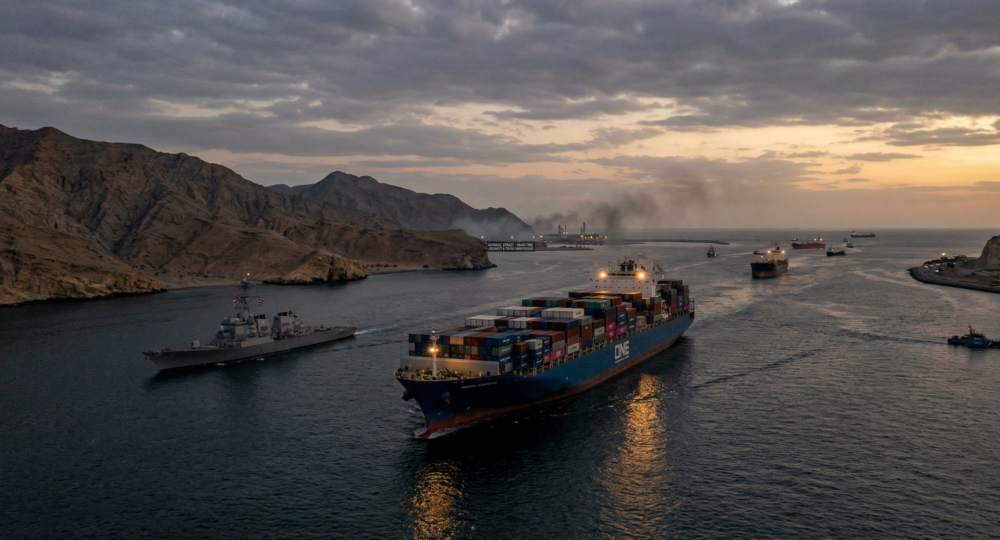
The war involving the United States, Israel and Iran is no longer only a Middle East security story. It has become a trade, energy and shipping shock with direct consequences for Asia’s supply chains, exposing how resilience, agility and sustainability are bound together in practice.
A distant war with immediate effects in Asia
For Asia, this conflict is not remote. The region remains heavily exposed to the Strait of Hormuz, one of the world’s most important chokepoints for oil and liquefied natural gas. The International Energy Agency notes that in 2025 nearly 15 million barrels a day of crude oil passed through Hormuz, alongside large volumes of oil products and LNG, with most of those exports heading to Asian markets. That makes Asia the first major region to feel the commercial impact when flows through the Gulf are disrupted.
That impact is already visible. Reuters reported on 30 March that Brent crude had climbed to about US$115 per barrel, up almost 60% from 27 February, while some refined product prices in Asia had more than doubled. The conflict, which began with US and Israeli strikes on Iran on 28 February, has left the Strait of Hormuz largely closed, turning a geopolitical confrontation into a direct cost shock for businesses across the region.
Why this is more than an oil story
It would be too simplistic to call this just another oil spike. The real issue for Asia-Pacific trade is that energy, shipping, insurance, inventory and supplier finance are moving under stress at the same time. Once fuel costs rise sharply, shipping routes become less predictable, marine insurance tightens and delivery schedules slip, the consequences reach far beyond the energy sector. They flow into manufacturing margins, working capital needs, freight contracts, consumer prices and supplier viability.
That is why this moment matters for sustainable trade. Sustainable trade is not only about whether a factory meets labour and environmental standards in stable conditions. It is also about whether supply chains can keep operating under pressure without transferring disproportionate costs onto workers, smaller suppliers or the climate. A system that looks responsible in calm periods may behave very differently in a crisis. This war is testing that difference in real time.
The Strait of Hormuz is a resilience issue, not just a map reference
The Strait of Hormuz can sound abstract in policy discussion, but for Asia it is a very practical vulnerability. The IEA states that in 2025 the strait carried roughly a quarter of the world’s seaborne oil trade and around one-fifth of global LNG trade. Most of that LNG also went to Asia. There are some alternative pipeline routes in the Gulf, but they are far from sufficient to replace normal flows if disruption becomes prolonged.
This is why the market reaction has been so sharp. Reuters described the present situation as approaching the “worst-possible scenario”, with a significant loss of effective supply and continuing risk to Gulf energy infrastructure. Barclays estimated that a prolonged Hormuz disruption could remove 13 to 14 million barrels a day from the market. Even if that exact scenario does not fully materialise, the fact that traders and governments are seriously discussing it shows how exposed the system remains.
Shipping disruption quickly becomes supply chain disruption
The damage does not stop at oil and gas benchmarks. Reuters reported that the conflict has already disrupted shipping patterns, reduced tanker movement, raised war-risk concerns and forced businesses to track energy infrastructure and vessel flows more closely. When ships hesitate to transit, insurers reprice risk and freight conditions change rapidly, Asia’s manufacturers and traders face a wider commercial squeeze.
The reason is simple. Shipping disruption changes delivery windows. It can delay feedstocks, chemicals, fuels and intermediate goods. It can push firms into more expensive rerouting. It can also make port and inventory planning less reliable. For sectors such as textiles, chemicals, plastics, consumer goods, food processing and electronics, these changes affect both costs and lead times. Sustainable trade cannot be discussed only at the factory gate when the transport system that connects production to markets is under strain.
Asia was already operating from a stressed baseline
The current conflict is not hitting a calm system. Global shipping had already been dealing with instability linked to Red Sea disruption, longer voyage times and higher costs. UNCTAD warned in its 2025 Review of Maritime Transport that maritime trade entered the year under pressure, with continuing route disruption and wider uncertainty over trade and logistics. In that context, the Gulf shock is landing on top of a system that had not fully returned to normal.
That matters because resilience weakens when firms must absorb repeated shocks in succession. A company may cope with one crisis through buffer stock, temporary rerouting or commercial flexibility. But when one disruption follows another, costs accumulate, planning windows shrink and supplier fatigue grows. For Asia’s supply chains, this war is therefore not a single event. It is the latest test in a period of sustained volatility.
The LNG shock may be even harder for parts of Asia
Oil gets the headlines, but the LNG story may be even more disruptive for some Asian economies. Reuters reported on 26 March that the conflict had hit Qatar’s LNG outlook and upended Asian demand growth, with prices in Asia up 143% since the war began. Expected global LNG supply growth for 2026 has also been revised sharply lower.
This matters because several Asian economies rely on LNG not as a luxury but as a balancing fuel for power systems and industry. Reuters noted that Bangladesh, India and Pakistan are among the most price-sensitive markets and are now facing demand destruction, rationing risks or a shift back towards coal. In other words, the conflict is not only making energy more expensive. It is changing fuel choices, with obvious consequences for emissions, public finances and industrial continuity.
Several countries are already in contingency or emergency mode
One of the clearest signs of the seriousness of the situation is the range of government responses now visible across Asia-Pacific. These are not identical, and not all are formal emergency declarations. But together they show that the energy and trade shock is already pushing countries into contingency-style management.
In Japan, the government has released reserves and asked the International Energy Agency for coordinated action. Reuters also reported that Tokyo will suspend, for one year from 1 April, a rule limiting utilisation of lower-efficiency coal plants in order to reduce LNG demand and protect electricity supply. This is a short-term security response, but it also reveals how quickly climate and transition plans can come under pressure when energy security tightens.
In South Korea, the government has expanded fuel tax breaks, raised fuel price caps, launched an emergency bond buyback, intensified energy-saving measures and moved to increase nuclear and coal utilisation. Reuters also reported temporary export controls on naphtha, a key petrochemical input. These are not symbolic steps. They show a state trying to stabilise inflation, industrial inputs and household costs at the same time.
Australia has also acted. Reuters reported that Canberra will halve excise on fuel and diesel for three months, underwrite spot cargoes and has already adopted further fuel security measures. This reflects not only concern about price, but also concern about physical availability, especially in a country where fuel reserves remain relatively limited.
New Zealand has warned that inflation could go “much higher” if the war drags on and deepens supply chain disruption. Even where shortages are not as visible, the macroeconomic effects are already being priced in. That matters because inflation feeds directly into transport, production, borrowing and household demand.
Across lower-income and more price-sensitive markets, the pressure is even sharper. Reuters reported that Bangladesh, India and Pakistan are especially vulnerable to the LNG shock. In those settings, higher fuel costs can move quickly into electricity stress, curtailed industrial activity, rationing and direct impacts on citizens’ daily lives.
What this means for supplier resilience
When energy and shipping costs rise quickly, the burden is not shared evenly across the supply chain. Large buyers usually have more financial room, stronger access to data and more flexibility in financing or logistics. Smaller suppliers often have none of those advantages. They still need to power factories, move goods, absorb delays and finance higher working capital needs before invoices are paid.
This is where resilience becomes a supply chain governance issue. If buyers hold firm on price, lead time and delivery conditions while the underlying cost base changes abruptly, suppliers may respond in ways that damage responsible business performance. They may cut back on maintenance, delay wage-related spending, reduce worker welfare measures, or rely on more fragile subcontracting arrangements. None of that will appear immediately in a headline oil price, but it is central to the real resilience of sustainable trade. This is an inference from the cost and liquidity pressures documented by Reuters and from the wider supply chain disruptions highlighted by UNCTAD.
Why agility needs a deeper meaning
The conflict is also revealing the difference between agility and improvisation. Many firms use the language of agility to describe quick decisions, rerouting or switching orders between locations. Some of that is necessary. But true agility means being able to adapt without creating larger problems somewhere else in the chain.
For example, rerouting cargo can preserve delivery schedules, but it may raise freight costs and emissions. Switching fuel sources may stabilise power supply, but it can worsen environmental performance. Demanding faster turnaround from suppliers may maintain output, but it can intensify pressure on workers. In this sense, agility that is not anchored in a wider resilience plan can turn into a series of short-term fixes that weaken sustainability outcomes.
The conflict is exposing concentration risk in plain sight
One of the most important lessons from this war is that concentration risk often sits outside the places companies normally map in detail. Many businesses have improved visibility over tier-one suppliers. Far fewer have a serious understanding of shared exposure to energy routes, fuel systems, marine insurance, petrochemical feedstocks or vulnerable ports.
A company can therefore appear diversified while still being highly concentrated. It may source from several countries, but all those suppliers can still depend on the same energy corridor, the same shipping hub or the same input markets. The Hormuz shock makes that problem visible. It shows that resilience is not only about where a product is assembled. It is also about the deeper systems that make trade possible.
There is also a climate contradiction in the current response
The war is creating an uncomfortable reality for climate and transition policy in Asia. Governments facing immediate supply risk are turning to measures that can secure power and ease prices, even when those measures are harder to reconcile with decarbonisation plans. Japan is relaxing constraints on lower-efficiency coal plants. South Korea is lifting some limits on coal power while increasing nuclear utilisation. Reuters also noted the risk that lower-income Asian economies may revert to coal when LNG becomes too expensive.
That does not mean transition goals have vanished. But it does mean crisis resilience and climate policy do not always move in a straight line together. For sustainable trade, that matters greatly. A supply chain may be under pressure to reduce emissions, yet the energy system around it may be moving in a more carbon-intensive direction because of security concerns. The result is a more difficult operating environment for businesses trying to manage both resilience and sustainability at once.
Policy coordination matters more than ever
The war is also reviving a wider policy debate about whether countries will cooperate or retreat into unilateral responses. Reuters reported that the UK planned to warn G7 partners against unilateral trade moves during the conflict, arguing that such steps would threaten global energy security, disrupt supply chains and push up costs further. That logic applies equally in Asia. When states respond to a shared shock with fragmented restrictions or defensive trade actions, the entire system becomes harder to stabilise.
At the same time, diplomacy is increasingly focused on trade routes and energy flow, not only on battlefield dynamics. Reuters reported that talks hosted by Pakistan were explicitly focused on proposals relating to the Strait of Hormuz. That shows how central commercial corridors have become to the geopolitics of the conflict itself.
What businesses in Asia should take from this
For businesses, the lesson is not simply to “monitor the situation”. It is to recognise that supply chain resilience has become more structural and more operational than before. Energy exposure, route exposure, supplier financing needs, inventory policy and commercial flexibility now need to be considered together. A sourcing strategy that looked efficient in normal conditions may prove far less resilient once fuel, freight, insurance and power costs all move at the same time. This is an inference grounded in the market and policy disruptions reported by Reuters and the structural trade vulnerabilities identified by the IEA and UNCTAD.
Businesses should also reconsider what responsible purchasing means during a shock. If buyers want resilient supply chains, they cannot view resilience as a supplier problem alone. Order terms, payment practices, lead times and cost-sharing all shape whether suppliers can withstand disruption without cutting corners. In periods like this, resilience and responsible business conduct are closely linked.
A defining test for sustainable trade in Asia
The significance of this war lies precisely in how many themes it brings together at once. It is an energy story, but also a logistics story. It is a shipping story, but also a supplier liquidity story. It is a geopolitical story, but also a test of whether sustainable trade frameworks can hold under real commercial strain.
The Hormuz shock is therefore not a side issue for sustainable trade. It goes to the heart of it. A resilient supply chain is not one that only works when fuel is cheap, routes are open and markets are calm. It is one that can absorb disruption without pushing excessive risk downwards onto workers, suppliers or more carbon-intensive pathways. Asia’s present exposure to this conflict is a sharp reminder that resilience, agility and sustainability are no longer separate agendas. They now stand or fall together.
This article is also available in:
8 comments
Leave a reply





[9907]sbj66 Official Login | বিকাশ ডিপোজিট ও সেরা স্লট গেম,sbj66 অফিসিয়াল সাইটে লগইন করে সেরা অনলাইন স্লট গেম খেলুন। বিকাশ দিয়ে সহজে ডিপোজিট এবং অ্যাপ ডাউনলোড করে আজই শুরু করুন। visit: sbj66
Really impressed with the variety of betting options. There is something for everyone here. I am sticking with 87a777bet
I was struggling to find the official link but zuma78login made it so easy. Everything works perfectly on my mobile browser.
[3303]yesb asia Official Login | সেরা অনলাইন ক্যাসিনো ও স্লট গেম,yesb asia-তে সহজ লগইন করে সেরা অনলাইন ক্যাসিনো গেমস উপভোগ করুন। বিকাশ দিয়ে টাকা জমা দিন এবং দ্রুত অ্যাপ ডাউনলোড করে খেলা শুরু করুন। visit: yesb asia
[571]jbovn | Đăng nhập, tải app và hướng dẫn chơi baccarat online,Truy cập jbovn để trải nghiệm sòng bài trực tuyến. Hỗ trợ nạp tiền casino qua Momo nhanh chóng và chia sẻ mẹo quay hũ nổ hũ dễ thắng. Tham gia ngay! visit: jbovn
I’ve tried a few platforms lately but this one really stands out. The interface is smooth and the payouts are surprisingly fast. Definitely worth checking out phjljl789
Best betting platform I have used in a while. The payouts are quick and the customer support is helpful. Go for kraibet!
I honestly did not expect such a polished experience from a casino site but this one blew me away. The live dealer tables run without any lag and the hosts actually know how to keep things fun. Deposit options are super flexible and I never had to wait more than a few minutes for my payouts. Highly recommend it to anyone chasing a good time. bdbengarcasino