
Indonesia’s human rights due diligence debate is moving closer to a policy framework
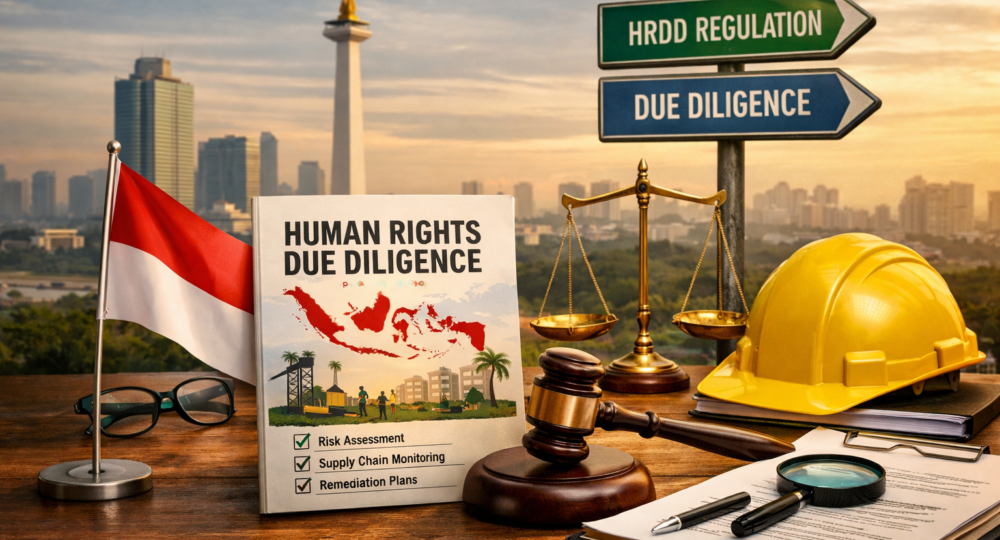
Jakarta does not yet have a final mandatory HRDD rule for the private sector. But recent ILO-led dialogue and legal signals around a new presidential regulation suggest the policy direction is becoming clearer, and businesses sourcing from Indonesia should start preparing now.
Indonesia is becoming a market to watch much more closely on business and human rights. The immediate story is not that a new binding law has already landed. It is that the country appears to be moving from discussion to architecture. In February 2026, the ILO convened a national dialogue on responsible business conduct and operationalising human rights due diligence in Indonesia, bringing together government, employers and other stakeholders around the practical question of how HRDD should work in business operations and supply chains. The ILO said the dialogue aimed to secure public endorsement of business and human rights commitments, support high-level policy discussion, and strengthen implementation of due diligence in practice.
That matters because it suggests the conversation has shifted. For several years, Indonesia’s business and human rights agenda has largely sat at the level of principles, strategy documents and pilot efforts. The latest signals point to something more structured. Legal commentary published in January 2026 says a new presidential regulation for the private sector is being drafted and is expected to require Indonesian businesses to conduct human rights due diligence, with entry into force anticipated by mid-2026.
If that timetable holds, the significance would be considerable. Indonesia already has Presidential Regulation No. 60 of 2023 on the National Strategy on Business and Human Rights, which serves as a guide for ministries, agencies, regional governments, businesses and other stakeholders. According to the legal analysis, that 2023 regulation already reflects the expectation that businesses should have a human rights policy and carry out human rights due diligence to identify, prevent, mitigate and account for risks arising from their own activities and those of business partners. What is now expected is a follow-up presidential regulation that would make the private-sector side more explicit and operational.
From broad commitment to business-facing rules
This is why the February dialogue deserves coverage even before a final text appears. The policy direction is becoming easier to read. Indonesia is not only reaffirming responsible business conduct in general terms. It is starting to work through how HRDD could be applied in practice, and what that might mean for companies on the ground. The ILO’s framing of the event is telling: the issue is no longer whether responsible business conduct matters, but how human rights due diligence can be operationalised in Indonesian business activity and supply chains.
That distinction is important for suppliers and buyers alike. Once a jurisdiction moves from endorsement to operational design, companies can no longer treat the issue as a distant ESG concept. They need to start asking more concrete questions. Which parts of the business create the highest human rights risk. Which suppliers, recruiters, contractors or intermediaries sit in the most exposed parts of the chain. Who owns the issue internally. What evidence exists to show that risks are being identified and acted on. Those are the kinds of questions that become much more urgent once a government begins building a business-facing framework.
Why Indonesia matters in regional supply chains
Indonesia is too important a sourcing and production base for companies to wait for a final legal text before taking notice. It plays a central role in sectors such as apparel and footwear, agrifood, fisheries, electronics, automotive components, mining and energy-linked supply chains. In a market with complex subcontracting, large workforces, informal labour arrangements in some segments, and varying levels of supplier maturity, a more explicit HRDD framework could have implications well beyond headline compliance. It could affect supplier onboarding, contractual clauses, grievance processes, purchasing practice discussions, investor scrutiny and export competitiveness. This is an inference from Indonesia’s position in regional supply chains and from the policy direction signalled by the ILO dialogue and the expected regulation.
The expected driver is also worth noting. The January legal commentary says the draft regulation appears to be motivated in part by sustainability and competitiveness concerns, especially in light of external developments such as the EU’s Corporate Sustainability Due Diligence Directive and Germany’s Supply Chain Act. That point deserves attention because it shows how international due diligence pressure is feeding back into domestic policymaking. Indonesia is not acting in a vacuum. It is responding to the reality that expectations set in export markets increasingly shape what counts as credible business conduct at home.
What companies should start doing now
For businesses sourcing from Indonesia, the most sensible approach is not to wait for a final rule and then scramble. The more prudent response is to begin mapping where HRDD could become more explicit. That means identifying the business units, suppliers and labour channels most exposed to human rights risk; checking whether internal policies go beyond paper commitments; reviewing grievance and remedy pathways; and looking at whether supplier management systems are robust enough to withstand more formal scrutiny. These are preparatory steps inferred from the expected direction of regulation and the ILO’s focus on operationalising HRDD.
It also means treating Indonesia as a policy market to watch, not only a sourcing market to manage. If a new presidential regulation does arrive in 2026, firms that have already mapped risk ownership, supplier leverage, documentation gaps and escalation channels will be in a far better position than those still relying on generic codes of conduct and periodic audits. The likely lesson is familiar: once due diligence becomes more explicit, evidence of process matters more than broad statements of intent. This is an inference grounded in the trend towards operationalisation described in the ILO materials and the draft-regulation commentary.
Not a final law yet, but no longer just a discussion
There is still an important note of caution. The private-sector HRDD rule discussed in legal commentary has not yet been finalised, and draft timelines can slip. Companies should therefore avoid overstating what is already law. But the absence of a final text should not obscure the larger point. The signals now coming out of Indonesia are strong enough to justify close attention. The country appears to be moving beyond general endorsement of responsible business conduct and towards a more defined compliance architecture for human rights due diligence.
This article is also available in:



22 comments
Leave a reply





[1357]Borneo189: Login Resmi Link Alternatif Situs Slot Gacor Hari Ini,borneo189 menyediakan link alternatif resmi untuk akses mudah. Nikmati kemudahan deposit via pulsa dan dana untuk main slot gacor hari ini. Daftar sekarang juga! visit: borneo189
[2564]2222 অফিসিয়াল লগইন | অনলাইন স্লট গেম ও বোনাস অফার,2222 অ্যাপ ডাউনলোড করে সেরা অনলাইন স্লট গেমের অভিজ্ঞতা নিন। এখানে পাবেন আকর্ষণীয় বোনাস অফার এবং বিকাশ ক্যাশআউট সুবিধা। আজই যোগ দিন। visit: 2222
[9914]apigacor: Login Resmi Situs Casino Terpercaya Deposit Dana,apigacor menyediakan akses download apk mudah dan pilihan slot deposit dana. Pelajari cara main baccarat di sini. Daftar sekarang untuk pengalaman bermain terbaik. visit: apigacor
[931]easybet Official Login | বাংলাদেশে সেরা অনলাইন ক্যাসিনো ও স্লট গেম,easybet-এ আজই যোগ দিন। বিকাশ দিয়ে সহজে টাকা জমা করুন এবং অ্যাপ ডাউনলোড করে সেরা অনলাইন স্লট গেমের অভিজ্ঞতা নিন। এখনই লগইন করুন। visit: easybet
The app interface is super smooth and the login process is a breeze. I really love how fast the games load. Definitely a great choice for anyone looking for a reliable platform. Check out 666jililoginapp
Top notch gaming experience! The variety of slots is amazing and I love the daily bonuses they provide. Highly recommend checking out bdbt777.
The APK installation was super simple and the app runs perfectly on my Android. No crashes so far. Get betwinerapk and start winning!
Such a friendly community and the rewards are actually generous. Loving my time on jililoveapp
A really refreshing site with a great vibe. The promotions are generous and actually useful for players. I’m having a blast on br5ggg.
I really enjoy the community vibe and the competitive games. It is my go to spot for relaxing after work. Check out brwingdas.
The graphics are stunning and the gameplay is just fluid. It is so much better than other sites I have used in the past. Check out bdx999game
Had a bit of trouble at first but the support team helped me get sorted quickly. Very professional service at gl777login
[9422]Kitab4d: Login Daftar Situs Slot Gacor Deposit Dana Pulsa,kitab4d menyediakan akses login dan daftar kitab4d apk dengan mudah. Nikmati judi slot deposit pulsa serta cara main baccarat online yang simpel. Gabung sekarang! visit: kitab4d
The registration process was super easy and I was playing within five minutes. Very intuitive design and great game selection on phsigi777.
Really impressed with the service here. The rewards are generous and the community vibe is great. If you are looking for a top notch spot, check out istanaimpian1.
I had a great run last weekend! The platform is stable and the rewards are fair. I will be returning to phnustra for sure.
Super impressed with the mobile version. I can play anywhere without any glitches. If you are on the move just use braposta1.
I’ve been trying out a few sites lately and this one really stands out. The interface is smooth and the payouts are surprisingly fast. Definitely my new favorite spot to hang out. Check it out at phokadaplay
This is exactly what I was looking for. The gameplay is intuitive and the rewards are fair. I’ll be spending a lot more of my free time on pkj555game.
[6811]Melbet বাংলাদেশ লগইন ও অ্যাপ ডাউনলোড | সেরা অনলাইন স্লট গেম,melbet বাংলাদেশ লগইন করে বিকাশ দিয়ে অনলাইন ক্যাসিনো উপভোগ করুন। দ্রুত melbet অ্যাপ ডাউনলোড APK করে লাইভ ক্যাসিনো খেলার নিয়ম জানুন ও জয়েন করুন। visit: melbet
I’ve tried a few platforms recently, but this one is definitely my favorite. The games load fast and the payouts are fair. Highly recommend phokjili for anyone looking for some real excitement!
[5401]mpo369: Login dan Daftar Slot Gacor Deposit Dana,mpo369 menyediakan akses login dan daftar mudah untuk slot gacor deposit dana. Download apk casino terpercaya dan pelajari cara main baccarat online di sini. visit: mpo369